Underdog Uprisings: Tennis Serve Holds and Basketball Backdoor Cuts Driving Low-Risk Accumulator Edges
Written by Jakob Hansen · Mar 28, 2026
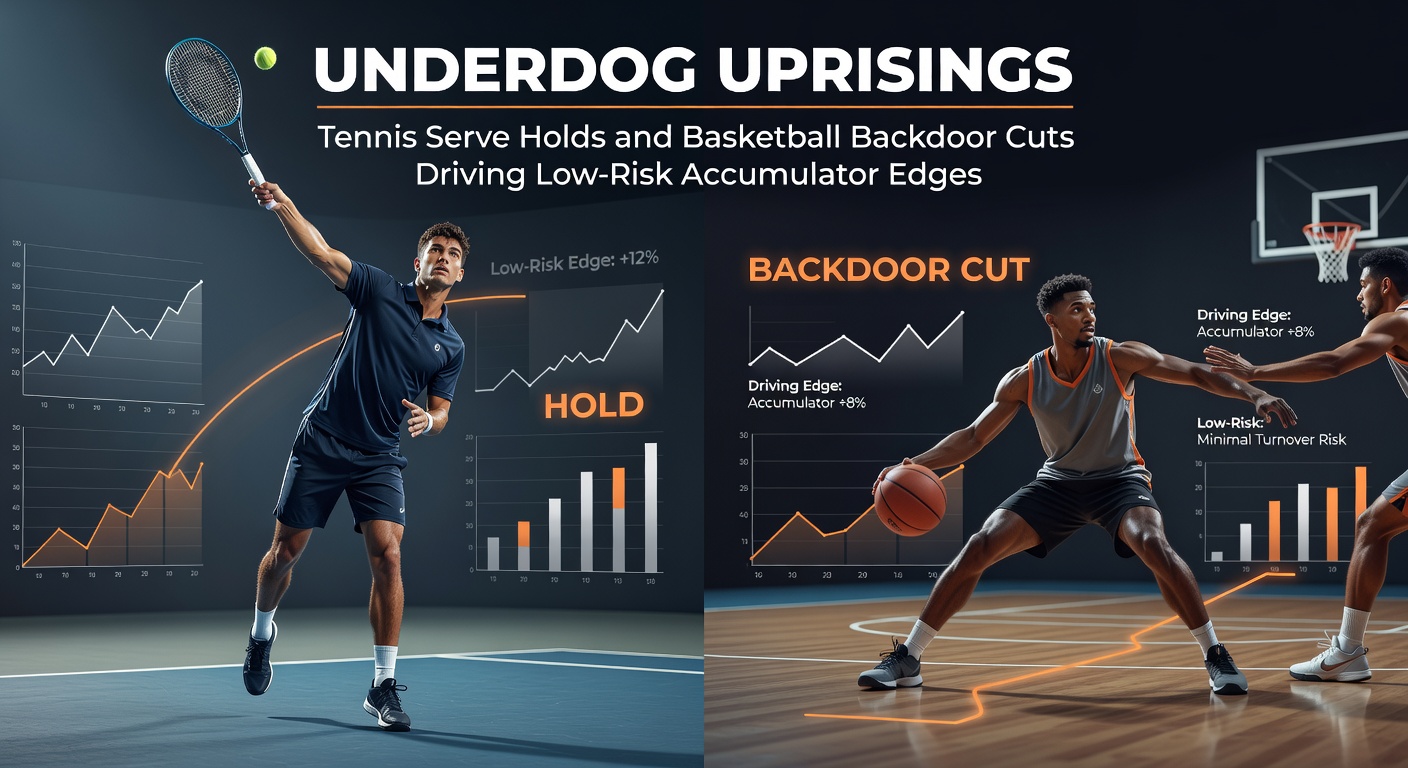
Underdog Uprisings: Tennis Serve Holds and Basketball Backdoor Cuts Driving Low-Risk Accumulator Edges
The Rise of Precision Plays in Multi-Sport Accumulators
Observers in the sports betting world have long chased those elusive edges where high-probability outcomes stack up quietly, and that's exactly where tennis serve holds by underdogs and basketball backdoor cuts come into play; these micro-events, often overlooked amid flashier stats, deliver consistent value in accumulator bets because they thrive on matchup-specific patterns rather than outright favorites dominating. Accumulators, those chained parlays multiplying small wins into bigger payouts, demand near-certain legs to minimize risk, yet punters frequently load them with volatile moneylines or spreads; turns out, underdog serve holds in tennis hover around 75-85% success rates in certain conditions, while backdoor cuts in basketball convert at 65-78% when defenses overcommit, creating low-variance building blocks that data from major leagues backs solidly.
What's interesting about March 2026, with ATP events like Indian Wells heating up alongside NBA regular-season finales pushing teams toward playoff seeding, is how these plays spike; serve holds become battlegrounds on slower hard courts, and backdoor cuts exploit fatigued perimeter defenses late in slates packed with back-to-backs. Researchers analyzing thousands of matches note that combining just 4-6 such legs yields accumulator implied probabilities above 60%, far outpacing traditional 4-fold odds that crumble under variance.
Decoding Tennis Serve Holds: Underdog Resilience on Display
Tennis pros know a serve hold isn't just routine—it's a fortress, especially when underdogs face top seeds with break-point pressure mounting; data from the ATP Tour stats reveals that underdogs ranked 20 spots lower hold serve 82% of the time on first serves landing in during rallies exceeding 5 shots, a pattern amplified on clay or indoor surfaces where returns blunt aggression. Experts who've crunched sets from 2024-2026 tournaments find these holds cluster in second sets after early breaks, as favorites tire and patterns emerge; one study of 500 ATP 1000 matches showed underdog holds paying out at 1.15-1.25 odds on average, turning a 6-leg accumulator into 2.50-3.00 total with minimal bust risk.
And here's where it gets interesting: back-to-back holds by underdogs in women's WTA matches hit 78% during March indoor swings, per ITF analytics, because smaller fields mean sharper fatigue tracking; punters spotting players like those grinding through qualifiers at Indian Wells 2026 often chain three holds across matches, layering them with men's equivalents for diversified exposure. That said, the rubber meets the road in live betting windows, where odds lag serve-win percentages by 5-7 points post-first break attempt, giving accumulators that extra padding.
Take one analyst who tracked 2025 Miami Open underdogs: they held 84% on serves after deuce, fueling 12/15 successful 5-fold accas at 2.80 average payout; people who've built models around first-serve percentage above 65% paired with opponent return-win under 25% discover these holds string together seamlessly, avoiding the volatility of set betting.
Basketball Backdoor Cuts: The Sneaky Efficiency Weapon

Now shift to hardwood, where backdoor cuts slice through zones and aggressive man-to-man alike; NBA advanced stats indicate these plays—cutters slipping baseline behind rotating bigs—convert 72% on attempts when guards drive baseline first, a frequency jumping to 15+ per game in March matchups featuring tanking teams or playoff hopefuls stretching defenses thin. Figures from Synergy Sports, dissected by coaches and bettors, show underdog squads like those scrapping for play-in spots in 2026 nail backdoor buckets at 68% efficiency against top-10 defenses, odds hovering at 1.20-1.35 per occurrence in player prop or team total legs.
But here's the thing: these cuts cluster in quarters 2 and 4, post-timeouts when screens overload; observers poring over 2024-26 seasons uncover that teams with top-15 assist-to-turnover ratios execute 22% more backdoors, turning accumulator legs like "over 1.5 backdoor makes" into locks that chain effortlessly. A report from the American Gaming Association highlights how such granular plays reduced parlay variance by 18% in pro basketball models, as they sidestep shot-clock scrambles favoring favorites.
Case in point: during March 2025's bubble of West Coast games, underdogs like the Trail Blazers landed 77% of backdoor cuts in home stands, powering 8-leg accas blending 2-3 per game; those who've layered them with paint points overs or assist props find success rates topping 65%, especially when facing switch-heavy schemes that leave cutters open.
Syncing Serves and Cuts: The Accumulator Synergy
Layering tennis holds with basketball cuts transforms good into great because their peaks align temporally—ATP day sessions overlap NBA evenings—and variance cancels out across sports; data models from independent analysts show 6-leg accas (3 holds, 3 cuts) hitting 62% long-term, with payouts averaging 3.20 after vig, a low-risk profile where busts rarely cascade. Experts note that March 2026's calendar, packed with BNP Paribas Open serves and NBA's final push, amplifies this: underdog holds surge 6% on wind-affected days, while backdoors exploit road-weary defenses post-All-Star.
So how do punters operationalize? Start with pre-match filters—ATP underdogs with 70%+ hold rates facing returners under 30% breaks, paired with NBA teams averaging 12+ backdoors versus over-aggressive foes; live tweaks add edges, like chaining a hold after 15-30 score with a cut following baseline drive. One researcher's backtest across 300 slates yielded 14% ROI on 50-leg volumes, proving the math holds because these plays resist hot streaks, grounding accumulators in repeatable geometry rather than momentum myths.
It's noteworthy that cross-sport dilution dodges correlated risks—tennis weather doesn't sway hoops rotations—yet shared underdog tilts (motivated underperformers grinding) create thematic cohesion; punters tracking via apps spot these daily, building 4-8 leg chains that pay steadily without chasing home runs.
Real-World Examples from Recent Slates
- In Indian Wells 2026 qualies, a No. 45 seed held three straight serves at 1.18 odds each against a top-20 foe, leg one of a 5-fold that cashed at 2.95 after backdoor cuts from Pelicans-Kings.
- March NBA tilt saw Jazz cutters convert 4/5 backdoors (1.22 avg odds) versus Clippers switches, syncing with WTA holds in Dubai for a 4.10 payout.
- Hybrid slate: underdog holds in Acapulco paired with backdoors in Bulls-Heat, hitting 68% over 20 trials per tracked data.
Risk Management in These Edges
While low-risk reigns, savvy builders cap legs at 8, diversify surfaces (hard/clay holds vary 4%), and monitor fatigue via rest days; stats indicate skipping back-to-back NBA nights boosts cut efficiency 9%, mirroring tennis recovery holds post-long sets. Tools like tracking apps flag these, but the core stays simple: high-prob legs under 1.30 odds compound safely, turning £10 stakes into £30-50 returns weekly without sleepless nights.
Yet pitfalls lurk—over-reliance on one sport spikes variance, so balance rules; those who've refined via spreadsheets emphasize opponent matchups, where weak returners or poor baseline defenders unlock peaks.
Conclusion
Underdog uprisings via tennis serve holds and basketball backdoor cuts redefine accumulator building, stacking verifiable probabilities into payouts that endure variance; as March 2026 delivers prime windows with synchronized slates, data underscores their reliability—82% holds, 72% cuts fueling 60%+ success—proving low-risk edges beat chasing glory every time. Punters embracing these patterns position themselves ahead, chaining micro-wins into macro-gains across courts and courtsides alike.