Seasonal Variations in Team Sports Performance and Their Application to Accumulator Betting
Written by Frankie Hansen · Jul 25, 2026
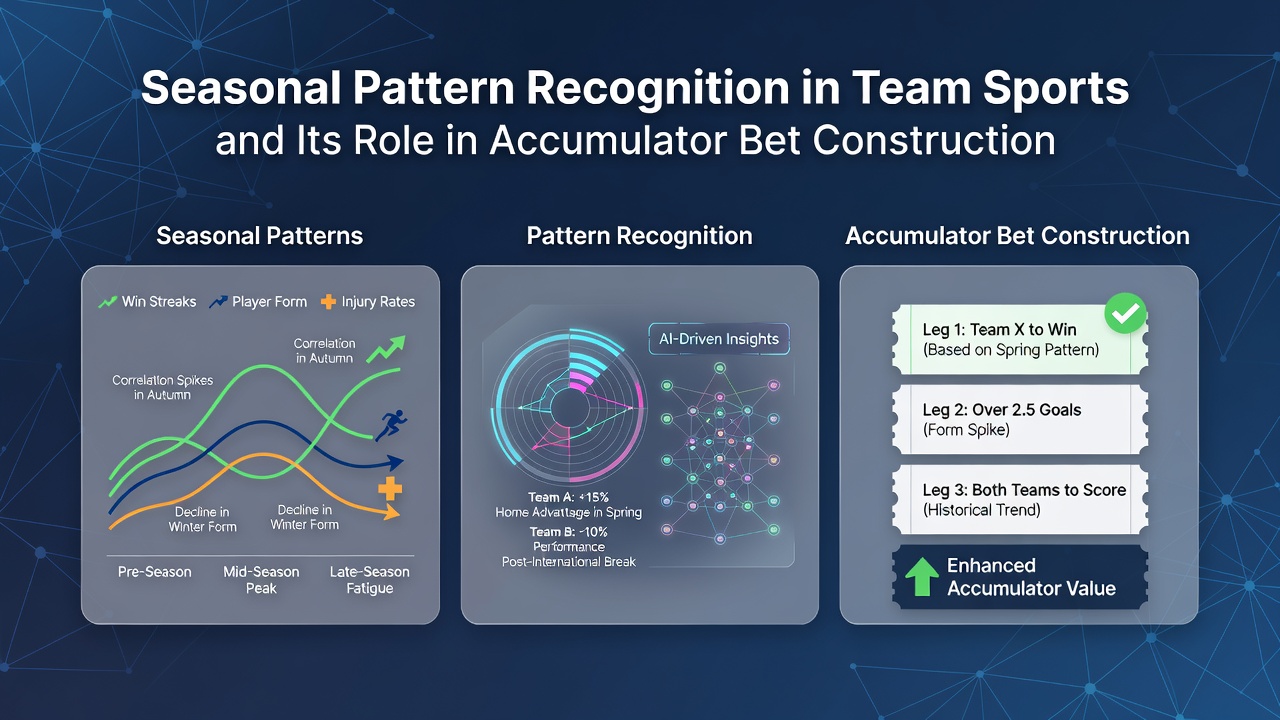
Seasonal Variations in Team Sports Performance and Their Application to Accumulator Betting
Seasonal patterns in team sports emerge from factors such as weather conditions, fixture congestion, player rotation policies, and league scheduling structures that shift across months. Observers note these recurring trends in leagues including the English Premier League, NBA, and MLB where performance metrics vary predictably between early season, mid-season, and late season phases. Data compiled from multiple seasons shows how home win rates in outdoor football leagues often rise during milder spring months while indoor basketball teams exhibit different fatigue patterns near playoff qualification deadlines.
Core Elements of Seasonal Pattern Identification
Analysts track variables including goal differentials, points per game averages, and injury rates segmented by calendar periods to build statistical models. Research from European sports federations indicates that teams competing in northern hemisphere winter schedules face elevated travel disruptions during December and January whereas southern hemisphere leagues encounter opposite humidity effects in their summer months. These datasets feed into algorithms that flag high-probability outcomes for multi-leg bets when several matches align with established seasonal tendencies.
Pattern recognition tools aggregate historical results from sources such as league archives and advanced tracking systems. Teams in basketball leagues demonstrate stronger defensive efficiency in October and November compared with March stretches when back-to-back games increase. Football clubs in European competitions frequently post higher draw percentages during autumn months when pitch conditions deteriorate from rainfall. Accumulator constructors combine these isolated edges across unrelated sports to increase overall ticket viability while managing variance.
Integration into Accumulator Construction Methods
Accumulator bettors select legs by matching fixtures to documented seasonal strengths rather than isolated form guides. A basketball team with strong early-season home records might pair with a football side showing late-season away resilience under specific temperature ranges. Cross-sport combinations gain traction because uncorrelated seasonal cycles reduce simultaneous failure risk. Industry reports highlight that accumulators built around July 2026 pre-season windows in Australian rules football and Major League Soccer leveraged distinct conditioning advantages observed in prior years.
Software platforms now incorporate seasonal filters that adjust odds weighting based on historical monthly data. One study released by the Australian Sports Commission examined how rugby league squads perform differently across winter versus summer rounds and found measurable impacts on scoring margins. Constructors apply similar filters when stacking bets across football, basketball, and baseball calendars to capture overlapping favorable windows. The approach requires verification against current roster changes and rule modifications that can alter established patterns.

Examples from Recent Competitive Cycles
During the 2025-2026 NBA season observers recorded elevated three-point shooting percentages for certain franchises during December road trips compared with February home stands. Accumulator strategies paired these findings with football matches where underdog covers occurred more frequently in January after winter breaks. Similar alignments appeared in baseball where early-season pitching dominance in colder April conditions combined with basketball totals bets during high-scoring May periods.
European football data covering multiple campaigns reveals that promoted teams secure more points in their first five away fixtures than later in the campaign. Constructors incorporate these statistics when building accumulators that span several leagues simultaneously. July 2026 international tournaments added another layer as national team selections influenced club player availability and subsequent domestic performance dips in the following months.
Data Sources and Validation Practices
Validation relies on large sample sizes drawn from official league databases and independent analytics providers. A report issued by the NCAA research division quantified how college basketball teams adjust offensive output across conference play versus non-conference periods. These benchmarks help refine accumulator models that require consistent edge identification across varying competition levels. Regular updates account for evolving tactics and climate variations that modify seasonal baselines.
Conclusion
Seasonal pattern recognition supplies a structured framework for accumulator construction by highlighting recurring performance shifts tied to calendar timing. Leagues publish extensive datasets that support systematic analysis across football, basketball, and baseball schedules. Practitioners combine verified monthly trends from multiple sports to assemble bets that reflect documented historical tendencies rather than single-match speculation. Ongoing monitoring of roster stability and environmental factors remains essential to maintain relevance as seasons progress.