Rest and Rotation Strategies in Professional Leagues: Enhancing Multi-Event Bet Formations
Written by Petra Roth · Aug 18, 2026
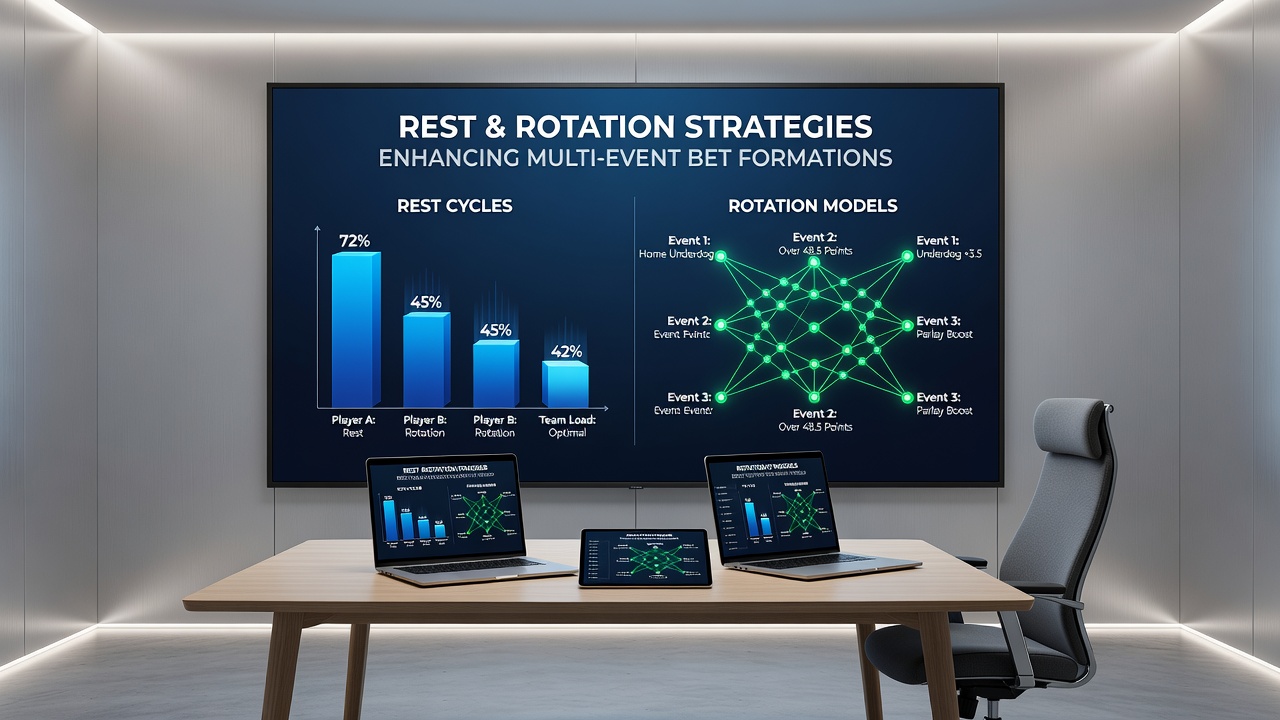
Rest and Rotation Strategies in Professional Leagues: Enhancing Multi-Event Bet Formations
Professional leagues across football, basketball, baseball and ice hockey have adopted structured rest and rotation plans that shape player availability throughout extended seasons, and those patterns directly influence how multi-event bet formations are constructed when bettors combine selections from several matches or games.
Core Elements of Rest and Rotation in League Schedules
Coaches and medical staff track cumulative minutes, travel distance and injury history to decide which players sit out specific fixtures, while data from wearable devices and recovery metrics guide these choices week after week. In the NBA, teams have used load management programs since the mid-2010s to preserve star players for playoff runs, and similar approaches appear in European football where domestic cups and continental competitions overlap with league play. August 2026 brings an especially dense calendar for several major clubs preparing for new domestic campaigns while still completing summer tournaments, which increases the likelihood that rotation decisions will appear earlier than in previous years.
Rotation does not occur randomly. Front offices publish squad lists that reveal which athletes receive planned rest days, and those announcements often precede official lineups by twenty-four to forty-eight hours, giving observers time to adjust expectations for team totals and individual performance markets.
How Workload Management Alters Performance Indicators
When a starting quarterback or point guard sits out, backup players step into larger roles and their statistical output tends to shift in predictable directions according to historical benchmarks maintained by league analytics departments. Research published by the Australian Institute of Sport examined rugby and basketball cohorts and found that athletes returning from scheduled rest periods posted improved sprint recovery times and reduced error rates in the first half of subsequent contests. Those measurable changes feed into models that project point spreads and totals across multiple games, allowing bettors to refine accumulator selections that mix football, basketball and baseball events on the same slip.
Travel schedules add another layer. Teams crossing multiple time zones show measurable declines in shooting percentages and defensive efficiency during the immediate follow-up game, according to figures compiled by the NBA’s own tracking partnership with Second Spectrum. Bettors who monitor flight logs and back-to-back situations can therefore weight certain legs of a multi-event bet more conservatively while seeking value in other contests where the opposing side also faces fatigue.
Integrating Rotation Data Into Accumulator Construction
Multi-event bets gain an edge when each selection accounts for verified roster changes rather than relying solely on season-long averages. A bettor might combine an NBA total with a football handicap and a baseball run line, yet the correlation between those markets tightens once rotation announcements from each league are cross-referenced. Software platforms that aggregate official injury reports and probable pitcher lists allow rapid comparison across time zones, and several European operators now display workload indices alongside traditional odds.

One documented case involved a mid-season NBA slate where three Western Conference teams rested their top scorers on the same night. Aggregators who adjusted player-prop expectations downward captured higher implied probabilities on the opposing teams’ totals, and those adjustments carried through when the same bettors later combined those basketball outcomes with football matches scheduled for the following evening. The process requires continuous monitoring because rotation decisions can change within hours of tip-off or kickoff.
League-Specific Patterns Observed in 2025-2026 Seasons
Baseball’s expanded playoff format has prompted managers to rest position players more aggressively during September, while ice hockey clubs in the NHL routinely shorten shifts for veteran defensemen during back-to-back sets in January. Football leagues governed by UEFA have introduced mandatory rest windows between Champions League matches and domestic fixtures, creating windows where squad depth becomes the decisive factor. Observers note that these policy shifts produce measurable variance in goal and point differentials that deviate from pre-season forecasts, and those deviations appear in public datasets released by the respective leagues each quarter.
Because multi-event bets often span several days, the timing of these rest cycles matters. A football accumulator built on Thursday fixtures may include teams that played midweek European matches, whereas a parallel basketball leg might feature squads on the second night of a road trip. Cross-referencing both calendars reduces overlap risk and highlights instances where one side holds a relative rest advantage.
Conclusion
Rest and rotation strategies function as structural inputs that reshape expected outcomes across professional leagues, and those inputs supply measurable signals for constructing multi-event bet formations. Official league reports, recovery studies and travel data together create a factual foundation that remains accessible to anyone who tracks roster announcements and schedule density on a weekly basis. As calendars grow more congested heading into August 2026, the same workload management patterns are likely to repeat, offering consistent reference points for informed bet assembly.