Integrating Preview Insights with Odds Metrics for Tennis and Basketball Accumulator Construction
Written by Petra Butler · Aug 6, 2026
Integrating Preview Insights with Odds Metrics for Tennis and Basketball Accumulator Construction
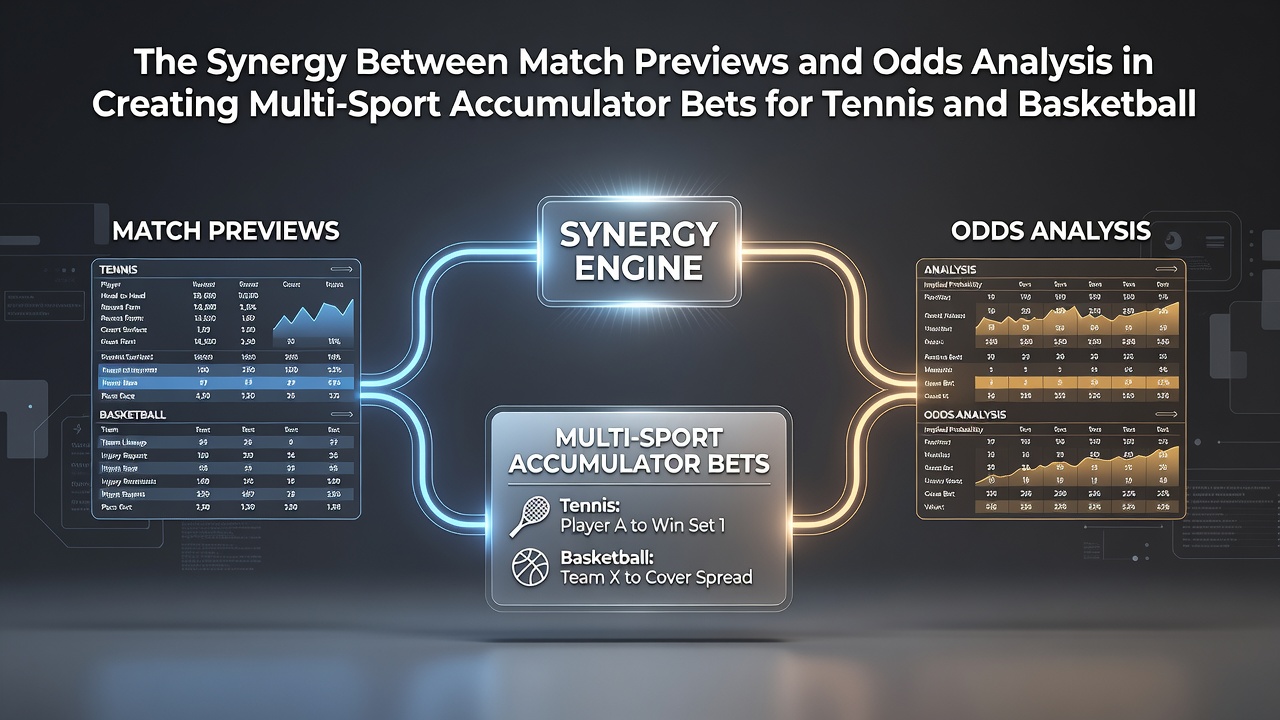
Match previews supply structured details on player form, head-to-head records, surface preferences, and injury updates while odds analysis tracks market movements, implied probabilities, and line adjustments across bookmakers, and the combination produces data layers that support multi-sport accumulator bets spanning tennis and basketball.
Core Elements of Match Previews in Each Sport
Tennis previews compile serve percentages, break-point conversion rates, and recent tournament results from sources such as ATP and WTA statistical databases, whereas basketball previews aggregate team efficiency ratings, pace factors, and individual player usage metrics drawn from league tracking systems; observers note that both sets of information become inputs when bettors construct accumulators that link outcomes from separate sports.
During August 2026, when the US Open series overlaps with NBA summer league play and early preseason preparations, preview data volumes increase because daily match reports feed directly into odds models that adjust for fatigue, travel, and scheduling density across the two calendars.
Odds Analysis Techniques and Market Signals
Odds analysis examines decimal or American price fluctuations, overround percentages, and steam moves that indicate sharp money placement, and these signals gain relevance when paired with preview content because a tennis match preview highlighting strong return statistics can align with a basketball odds shift showing value on under totals after a high-paced preview reveals defensive trends.
Researchers at institutions such as the American Gaming Association have documented how integrated data sets improve the identification of correlated outcomes across leagues, although correlation coefficients vary by sport and time of year.
Building the Synergy for Multi-Sport Accumulators
Accumulator construction begins with the selection of individual legs whose probabilities derive from preview-derived expected values cross-referenced against current odds, and the process continues by testing combinations for independence or mild positive correlation; tennis serve-hold rates, for example, rarely share direct statistical links with basketball three-point percentages, yet both can be evaluated through shared risk factors such as player motivation or rest intervals.

One documented workflow used by professional syndicates involves loading preview variables into probability simulators that output adjusted odds, then comparing those outputs to live bookmaker lines to locate discrepancies; the same workflow extends across sports because the underlying code treats each leg as an independent event while accounting for variance introduced by different scoring systems and match durations.
Practical Data Integration Steps
Analysts first standardize preview metrics into comparable units, such as converting tennis win probabilities and basketball point differentials into expected value percentages, after which odds from multiple operators are scraped and normalized for vig removal; the resulting tables allow direct comparison of preview-implied edges against market-implied edges.
Industry reports from the Victorian Responsible Gambling Foundation indicate that bettors who maintain consistent data pipelines record lower variance in accumulator returns over multi-month periods, primarily because the pipelines flag when preview information and odds diverge sharply.
Seasonal Timing Considerations in 2026
August schedules create natural overlaps because tennis Grand Slam events generate high-frequency preview updates while basketball organizations release training-camp notes and injury lists that feed early odds markets; those simultaneous data streams increase the number of candidate legs available for cross-sport accumulators.
Conclusion
The documented relationship between preview content and odds movement supplies a repeatable framework for constructing tennis and basketball accumulators, and continued refinement of data pipelines supports more precise leg selection without altering the fundamental requirement that each outcome must be evaluated on its own statistical merits.